

Most sauna comparisons treat wood-fired and electric as two equally valid paths to the same destination. They're not. The heat source determines the quality of the experience, the depth of the physiological response, and whether the sauna you invest in actually delivers the outcomes that justify the purchase. This comparison covers the real differences — with the specificity a serious buyer deserves.
The Heat Is Not the Same
This is the distinction that matters most and gets glossed over in every neutral comparison article. Wood-fired and electric saunas can read the same temperature on a thermometer and produce genuinely different experiences. Understanding why is what separates an informed buyer from one who ends up with a $4,000 installation they use twice a month.
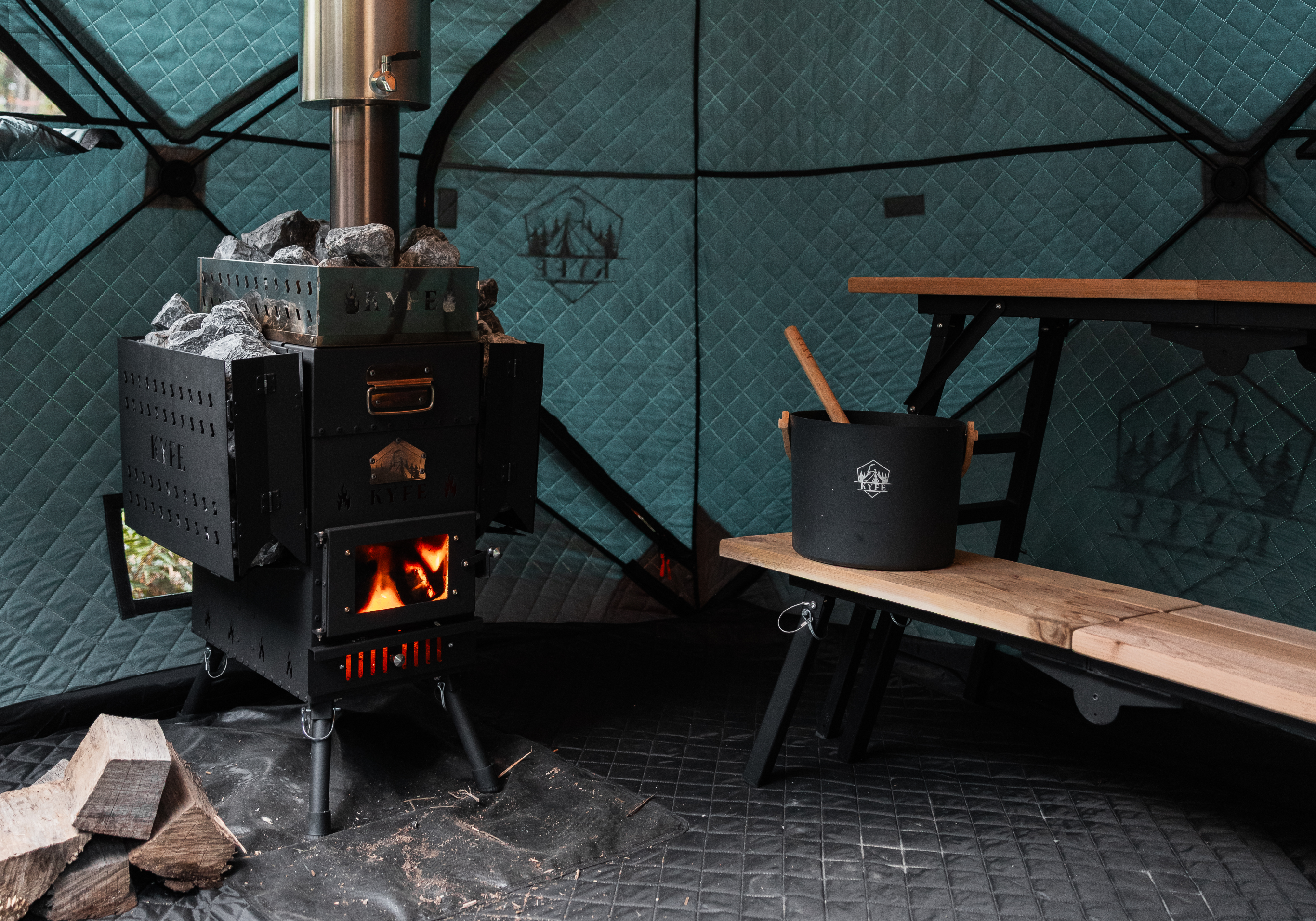
Wood-fired heat works through thermal mass. A wood-burning stove heats a large volume of dense sauna rock — the Kyfe uses 35 pounds of it — which stores that energy and radiates it steadily throughout the session. The heat is alive. It ebbs and flows with the fire, penetrates differently than coil-generated heat, and produces a full-body response that experienced users describe as enveloping rather than ambient. When water hits those superheated rocks, löyly — the steam that defines authentic Finnish sauna — erupts from the stone. That's not a feature. That's the experience the research is based on.
Electric heat generates temperature through resistance coils. It maintains precise readings and heats a smaller stone mass consistently. What it doesn't do is match the radiant depth of thermal mass heat. Experienced sauna users consistently describe the difference as the gap between being wrapped in heat versus sitting in a hot room. The thermometer says the same thing. The body knows otherwise.
For a buyer asking whether the investment is worth it — the heat quality gap between wood-fired and electric is the most compelling reason the answer is yes, and why it matters which product you choose.
Temperature: Wood-Fired Has No Ceiling
Electric sauna heaters sold in the United States are governed by UL code limiters that cap maximum output at approximately 194°F. That's the regulatory ceiling — not a performance number. Many standard electric units take 30–45 minutes to reach that ceiling and are designed to cycle off after a set session period, requiring a restart for extended use.
Wood-fired saunas have no such limitation. The Kyfe Portable Sauna Tent reaches 200°F in under 30 minutes and holds that temperature for the full session — no limiter, no timer, no restart. The fire determines the ceiling. A well-managed fire can push well beyond 200°F for users who want it.
That temperature gap matters more than it sounds. The Finnish longitudinal research linking sauna use to reduced cardiovascular mortality, lower dementia risk, and improved longevity is based on sessions consistently above 170°F. The heat shock protein response that supports muscle repair and cellular resilience is maximized at genuinely high core temperatures. Both wood-fired and electric can reach the research threshold — but only one does it without regulatory constraints, session timers, or a dedicated electrical circuit cutting the experience short.
Installation Cost: The Number Electric Brands Don't Lead With
The sticker price on an electric sauna rarely represents what you'll spend before your first session. A quality electric cabin sauna runs $3,000–$8,000 for the unit. Getting it operational requires a dedicated 240V circuit — typically a 40-amp breaker with appropriate wire gauge. Professional electrical installation adds $500–$1,200. In homes with older panels, the panel upgrade required before any new 240V circuit can be added runs $1,500–$3,000. Permits and inspections are required in most jurisdictions. The total infrastructure cost before a single session commonly lands between $2,000 and $5,000 on top of the unit price.
The Kyfe requires none of that. No electrician. No permit for a portable structure in most jurisdictions. No panel upgrade. No dedicated circuit. The infrastructure cost is zero because the Kyfe runs on wood — and the complete kit, including stove, rocks, gloves, thermometer, travel bag, and a free cold plunge, ships for $1,499.
That's not a budget comparison. That's the same outcome — 200°F dry heat with real sauna rocks — at a fraction of the all-in cost. For the buyer standing in their backyard asking whether this is worth it, the cost-per-outcome calculation resolves quickly.
Portability Changes How Often You Actually Use It
The strongest health associations in sauna research — cardiovascular outcomes, longevity, stress reduction — are linked to frequency. Four or more sessions per week produces meaningfully better outcomes than once-a-week use. That single data point reframes the portability question entirely.
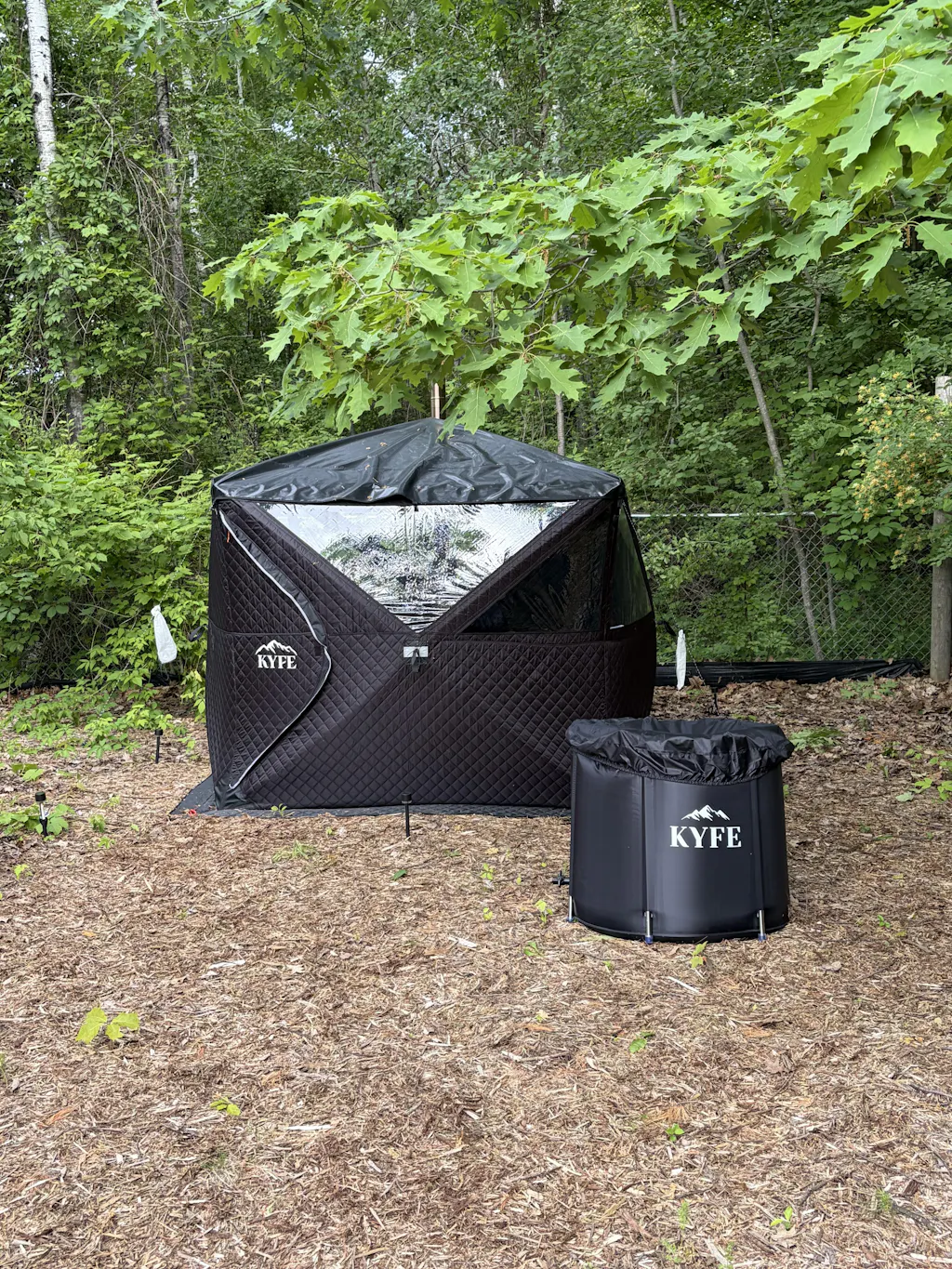
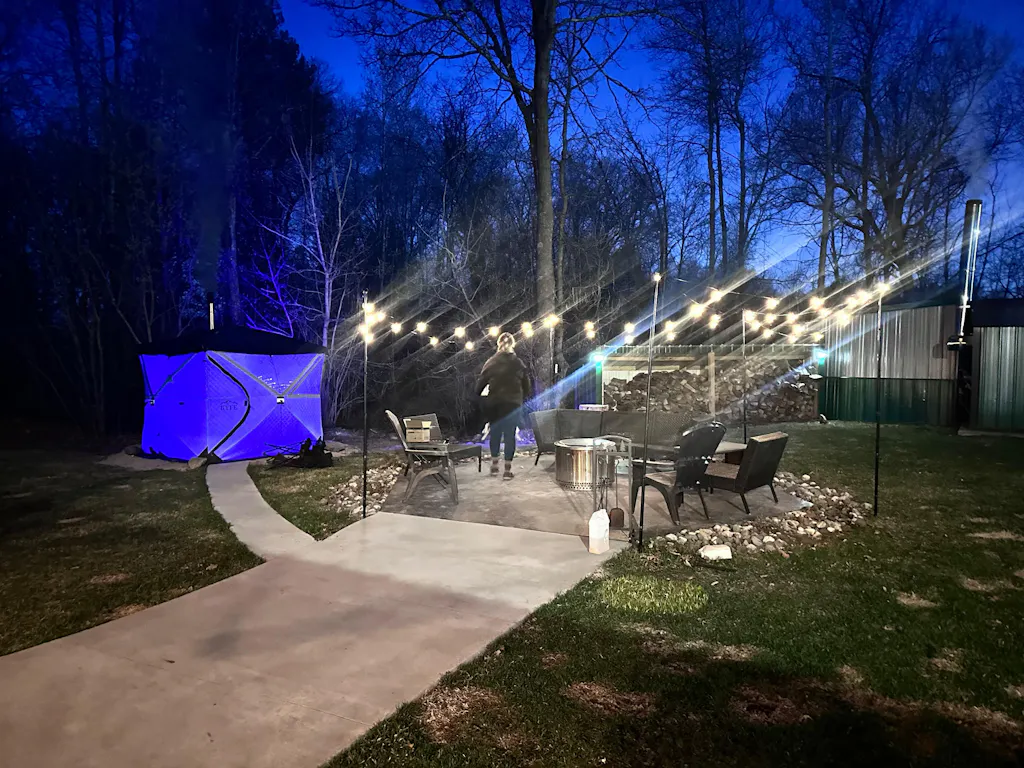
An electric sauna is fixed. You use it when you're home, when the circuit is available, when the room it's installed in is accessible. A wood-fired portable sauna goes wherever you go. The Kyfe packs into a travel bag, sets up in 15 minutes on grass, concrete, a cabin deck, or a riverbank, and requires nothing but wood. Customers use it after training sessions in the backyard. At lake houses on the weekend. At campsites. In January with snow on the ground and 200°F inside.
The practical effect of that portability is frequency. A sauna you can deploy anywhere, on any schedule, with no friction is a sauna you use four times a week. That's not a lifestyle point — it's the variable the research identifies as the difference between meaningful long-term health benefit and occasional use.
Running Costs Over Time
Electric saunas have a cost-per-session that compounds indefinitely. A 6–9 kW heater running a 45-minute session costs $1.50–$3.00 at average U.S. electricity rates. Four sessions per week runs $312–$624 per year. Over five years at consistent use, that's $1,560–$3,120 in electricity alone — before rate increases.
Wood-fired saunas run on firewood. If you have access to wood on your property, the session cost is zero. If purchasing seasoned hardwood, a typical session costs well under $5 depending on your region. Over five years of regular use, the running cost differential between the two formats is a real number that changes the total investment calculation significantly.
EMF: A Daily Use Consideration
Electric heaters emit electromagnetic fields — that's the operating mechanism. Quality manufacturers design for low EMF output and the best provide third-party testing data. For occasional users this is a minor consideration. For buyers using a sauna daily as a core part of their health routine, cumulative EMF exposure over months and years is a legitimate variable.
Wood-fired saunas produce zero EMF. The heat source is wood and stone. There is no emission to measure. For daily users, that's not a marketing point — it's a built-in advantage that requires no trade-off.
The Research Is Based on This Type of Heat
Several comparison articles treat wood-fired authenticity as a preference. It isn't — it's a relevance question for health-focused buyers.
The Finnish research that produced the most compelling data on sauna and longevity, cardiovascular health, and cognitive protection was conducted in traditional wood-fired saunas. The specific conditions — high ambient heat, real steam from hot rocks, temperatures consistently above 170°F — are the conditions under which those outcomes were measured. The research isn't a general endorsement of heat exposure. It's a documentation of what happens to the human body under these specific conditions.
When you invest in a wood-fired sauna, you're investing in the format the evidence is actually about. That matters when the reason you're making this purchase is health. You can read more about what that research specifically found in our posts on how sauna affects metabolism and whether saunas help you live longer.
Where Electric Has a Legitimate Advantage
A credible comparison acknowledges where the alternative wins. Electric sauna is genuinely better in two situations:
Indoor installation. Wood-fired saunas require outdoor placement or dedicated ventilation for the stove. If you have no outdoor space — apartment, urban condo, no accessible outdoor area — electric is the practical option. The Kyfe is an outdoor product and won't pretend otherwise.
Zero management. Electric requires no fire-starting, no wood management, no monitoring. If the friction of building and managing a fire is a genuine barrier to consistent use, electric removes it. Convenience matters if it's the variable that determines whether you actually use the sauna regularly.
If either of those constraints applies to your situation, our comparison of dry sauna vs infrared sauna covers the indoor options in detail.
The Honest Scorecard
| Category | Wood-Fired (Kyfe) | Electric |
|---|---|---|
| Heat quality | Deep, radiant, thermal mass | Consistent, surface-level |
| Max temperature | 200°F+ — no limiter | ~194°F — UL code capped |
| Session limits | None — fire determines duration | Timer-dependent, requires restart |
| Installation cost | Zero | $2,000–$5,000+ all-in |
| Running cost | Near zero (wood) | $300–$600+/year |
| EMF exposure | Zero | Low–moderate |
| Portability | Complete — goes anywhere | Fixed to power source |
| Indoor use | No — outdoor only | Yes |
| Research alignment | Direct — traditional Finnish format | Indirect |
| Total investment (5yr) | ~$1,499 + wood | $5,000–$11,000+ all-in |
Common Mistakes That Lead to Purchase Regret
Comparing sticker prices instead of all-in costs. The $3,500 electric cabin and the $1,499 Kyfe are not $2,000 apart. When installation, electrical work, permits, and five years of electricity costs are included, the gap narrows or reverses entirely.
Optimizing for convenience over frequency. The most convenient sauna is the one that gets used. An electric sauna installed in a dedicated room with a timer app is convenient — but a portable sauna that deploys in 15 minutes anywhere is the one that produces four-times-per-week frequency. Frequency is what the research rewards.
Assuming temperature equals heat quality. Two saunas reading 185°F are not producing identical experiences or identical physiological stimuli. Thermal mass heat from wood-fired rocks and coil-generated heat from an electric element are different in quality, depth, and how the body responds to them. Temperature is necessary but not sufficient.
Overlooking the long-term running cost. A $1.50–$3.00 session cost sounds trivial. Across five years of serious use it becomes $1,500–$3,000 in electricity — a cost wood-fired buyers don't pay.
The Bottom Line
Electric saunas are competently built and effective for buyers with indoor-only requirements or a strict need for thermostat convenience. For every other serious buyer — homeowner with outdoor access, athlete building a recovery protocol, wellness-focused individual making a long-term health investment — wood-fired wins on the metrics that matter.
Better heat quality. Higher temperature ceiling. Zero installation cost. Near-zero running cost. No EMF. Complete portability. Direct alignment with the research that justified the investment in the first place.
The Kyfe Portable Sauna Tent is $1,499, includes everything, ships in 1–2 days, and comes with a free cold plunge. It reaches 200°F in under 30 minutes and goes wherever you need it.
60-day returns. Free shipping on orders $150+. Call or text +1 (828) 782-8600.
FAQs
Does wood-fired sauna actually outperform electric on health outcomes? The research most frequently cited on cardiovascular health, longevity, and heat shock protein activation was conducted in traditional wood-fired saunas operating above 170°F. Wood-fired produces deeper thermal mass heat at higher temperatures without regulatory limiters. For health-focused buyers, the format alignment with the research is a real differentiator — not a branding point.
How does the Kyfe reach 200°F in under 30 minutes without electricity? The Kyfe's wood-burning stove heats 35 pounds of sauna rocks directly. Dense, seasoned hardwood burns hot and fast. The insulated tent retains heat efficiently. The result is 200°F in under 30 minutes from a cold start — faster than most governed electric heaters, without any electrical infrastructure.
Do I need a permit for a portable wood-fired sauna? In most jurisdictions, portable structures do not require building permits. The Kyfe is not a permanent installation. Our detailed breakdown of permit requirements by structure type is in our post on sauna permits.
What wood should I use in a wood-fired sauna? Dense hardwoods — oak, hickory, birch, maple — produce the most consistent heat output with clean burn. Softwoods like pine burn fast and can produce excess resin and smoke. Our complete guide to what wood to burn in a sauna covers this in detail.
What comes with the Kyfe — do I need to source the stove separately? The Kyfe ships complete: insulated sauna tent, stainless steel wood-burning stove, sauna rocks and rock cage, tent travel bag, fire poker, heat-resistant gloves, thermometer, and instruction manual. A free cold plunge is included automatically with every order. Nothing is sold separately.
Sauna vs Steam Room: Why Sauna Wins (And What the Research Actually Says)
Portable Sauna vs Traditional Sauna: Which Is Better for Home Use?