

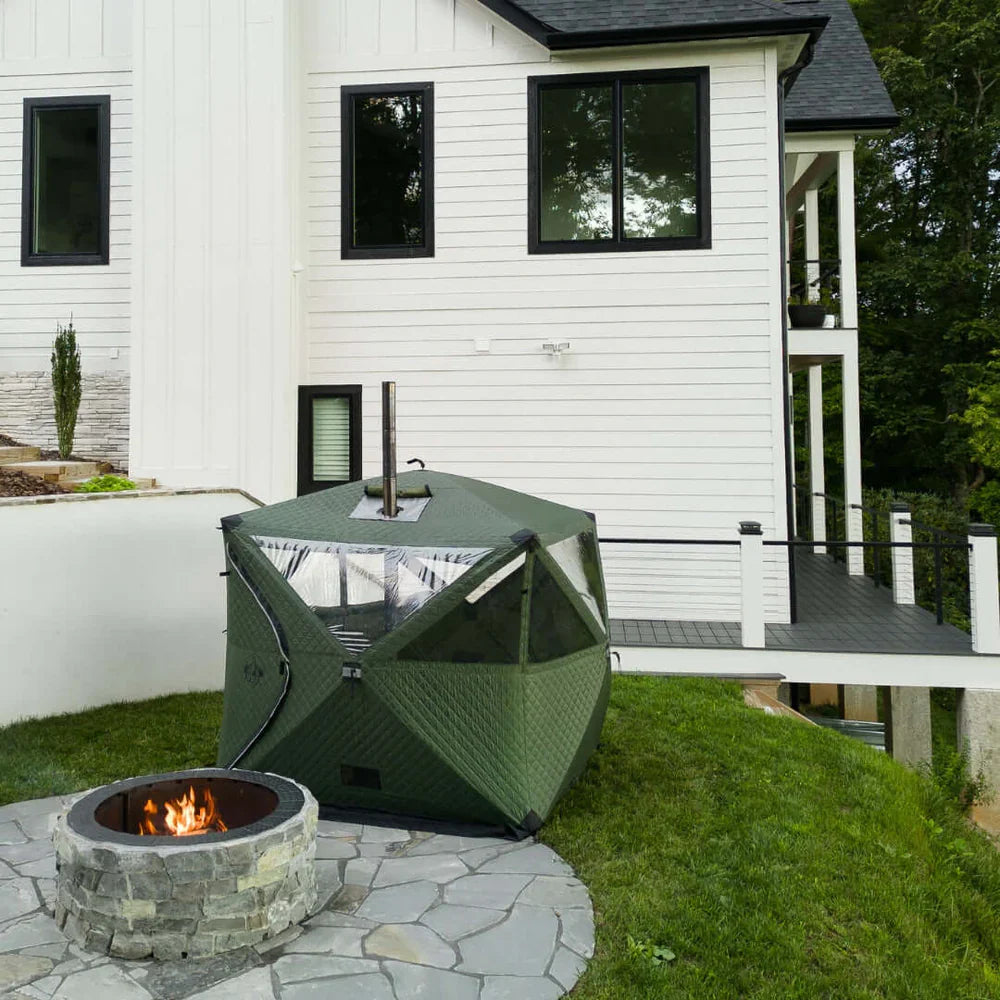
Two products. Both outdoor. Both wood-fired. Both capable of reaching genuine sauna temperatures. Both marketed to the same buyer — the homeowner who wants a real sauna experience without the cost and commitment of a built-in installation.
The question is which one actually wins when you run the numbers, use them daily, and evaluate them over the long term.
We make the Kyfe. We'll be transparent about where barrel saunas have a genuine advantage — and direct about why the portable tent wins on the metrics that matter most to the buyer taking this decision seriously.
What a Sauna Barrel Actually Is
A barrel sauna is a cylindrical wooden structure — typically cedar, spruce, or hemlock — laid on its side with a sauna stove installed inside. The barrel design creates a naturally efficient heat distribution system: hot air rises and circulates within the curved walls, reaching the upper benches quickly and maintaining heat with less energy than a rectangular cabin.
Barrel saunas are typically installed outdoors on a permanent pad or platform. They connect to either a wood-burning stove — with a chimney vent through the top or back — or an electric heater wired to a dedicated circuit. Sessions run at 160–190°F for wood-fired models. Most barrel saunas accommodate two to six people depending on size.
They're visually distinctive, durable, and built to last decades with proper maintenance. For buyers who want a permanent backyard sauna that doubles as an aesthetic feature of their property, the barrel format has real appeal.
What a Portable Sauna Tent Actually Is
The portable sauna tent category gets misrepresented in most comparison articles because most articles are comparing steam tents — zip-up fabric enclosures with electric steam generators that reach 113–130°F — to barrel saunas. That's not a fair comparison. That's not the same product.
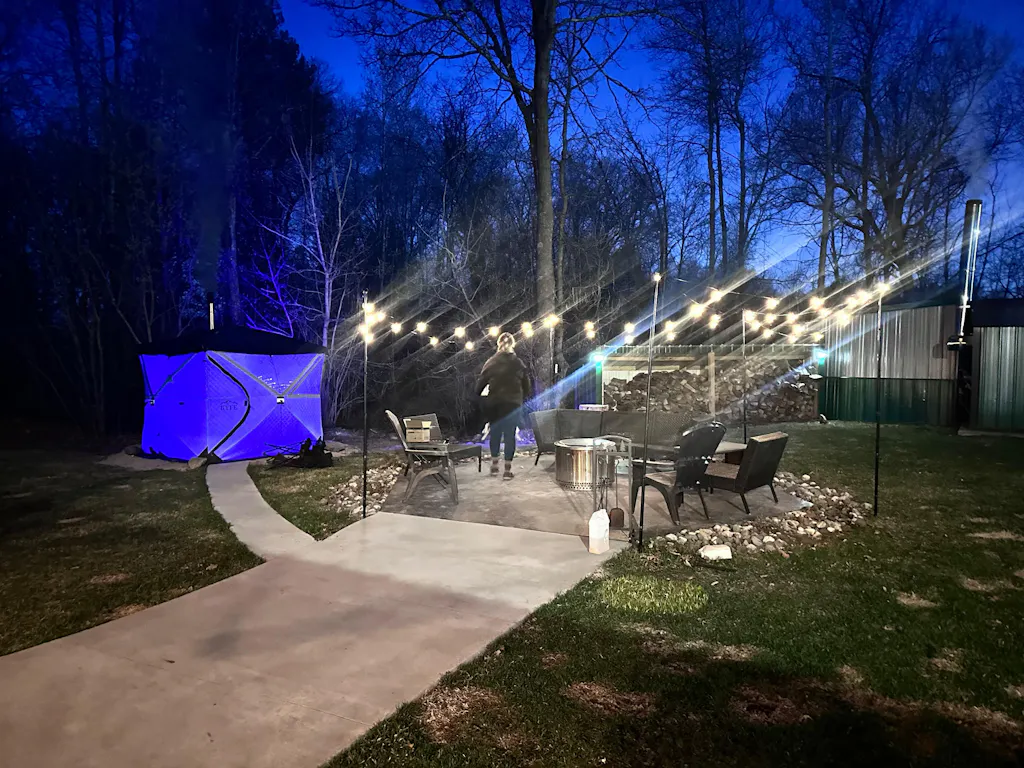
A wood-fired portable sauna tent like the Kyfe is a different category entirely. It's a full-size insulated tent paired with a wood-burning stove and real sauna rocks, capable of reaching 200°F, producing authentic löyly, and delivering the same physiological experience as a permanent wood-fired barrel sauna — in a format that packs into a travel bag and sets up in 15 minutes.
Understanding that distinction changes this comparison entirely. This is not a debate between a premium permanent sauna and a budget portable approximation. This is a comparison between two wood-fired outdoor saunas that deliver essentially equivalent heat — one of which costs 3–10x more, can't move, and takes months to install.
Heat Quality and Temperature: Closer Than You Think
This is the question most buyers start with, and the answer surprises many people who assume a permanent structure must outperform a portable one on heat.
Barrel saunas with quality wood-burning stoves reach 160–190°F in 30–45 minutes. The cylindrical design helps — hot air circulates efficiently within the curved walls, and the dense wood holds heat well. A well-built barrel sauna produces excellent löyly when water is poured over properly heated rocks.
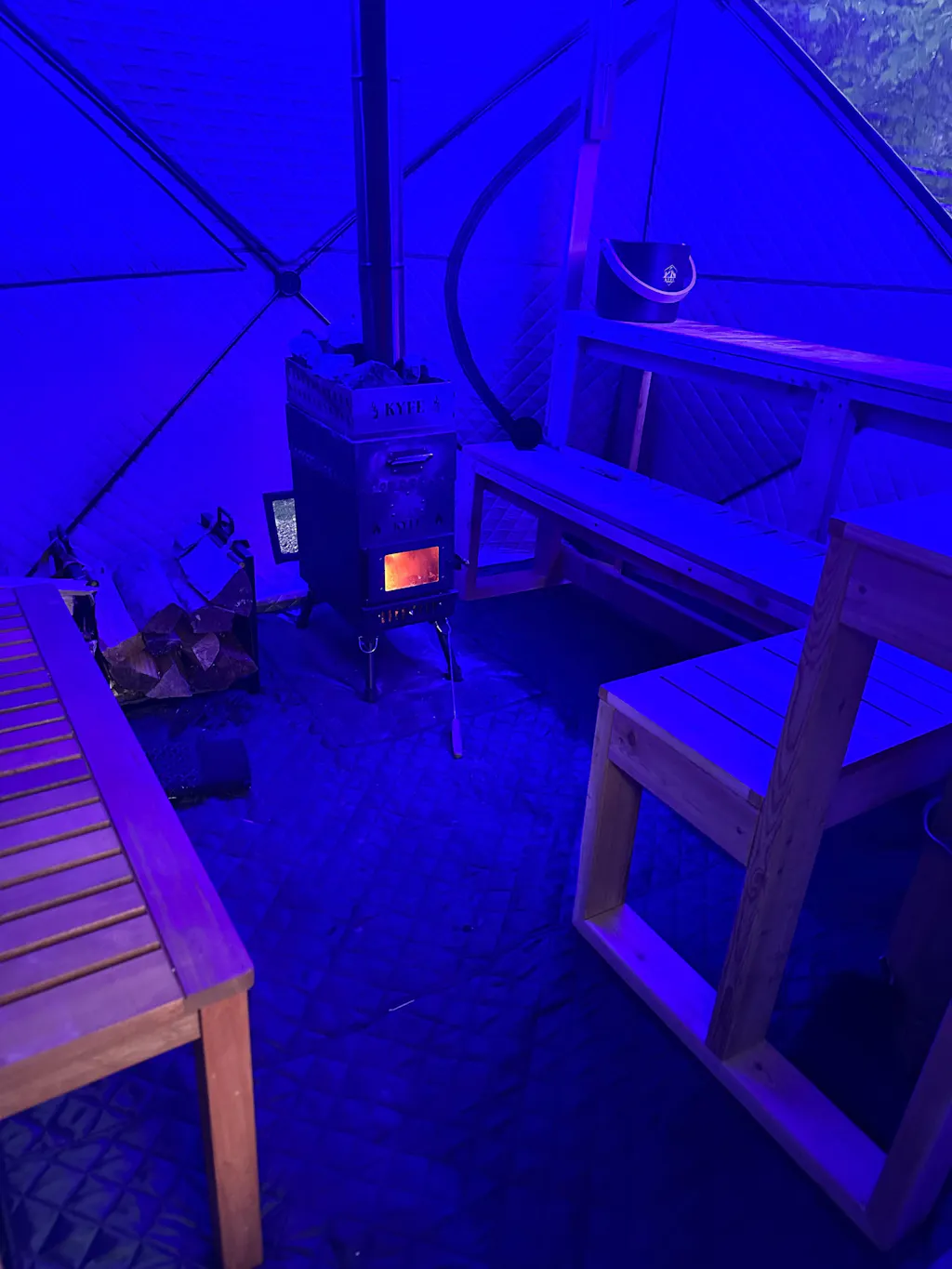
The Kyfe reaches 200°F in under 30 minutes. The wood-burning stove heats 35 pounds of volcanic rock to temperatures above 600°F, producing flash evaporation löyly that many experienced sauna users describe as lighter and softer than what most electric or undersized wood-burning stoves produce. The triple-layer insulated shell — 420D Oxford Polyester with PU waterproof coating and 120gsm cotton insulation — retains heat efficiently enough that the Kyfe maintains operating temperature through winter sessions in cold climates.
The honest assessment: on heat quality and temperature performance, a well-built wood-fired barrel sauna and the Kyfe produce comparable experiences. The Kyfe slightly edges it on maximum temperature — 200°F vs. the typical 170–190°F of most barrel saunas — but the quality of the löyly experience is equivalent when both are properly heated.
Heat quality is not where this comparison is decided. Cost, portability, and total value are where it is.
You can read more about what temperature thresholds mean for your health outcomes in our post on how sauna affects metabolism.
The Real Cost Comparison: What Nobody Tells You Upfront
This is the section most comparison articles skim — because the numbers are uncomfortable for barrel sauna sellers. Here is the complete picture.
Barrel Sauna — All-In Cost:
A quality cedar barrel sauna unit runs $2,500–$6,000 depending on size, wood grade, and brand. That's the sticker price. Here's what the sticker price doesn't include:
Delivery and site preparation: $300–$600. Barrel saunas are heavy and require a flat, level base — typically a concrete pad, gravel bed, or pressure-treated timber platform. A properly prepared pad runs $500–$1,500 to install professionally.
If you choose electric heating: a dedicated 240V circuit installation adds $500–$1,200. In older homes, panel upgrades add $1,500–$3,000.
If you choose wood-fired: chimney components, flashing, and installation add $200–$500.
Permits: most municipalities require a building permit for a permanent outdoor structure. Permits run $100–$500 depending on your jurisdiction and the size of the structure.
Staining and finishing: cedar requires exterior treatment every 2–3 years. First application plus materials run $200–$400.
Barrel sauna total all-in cost before first session: $4,000–$12,000+
Kyfe Portable Sauna Tent — All-In Cost:
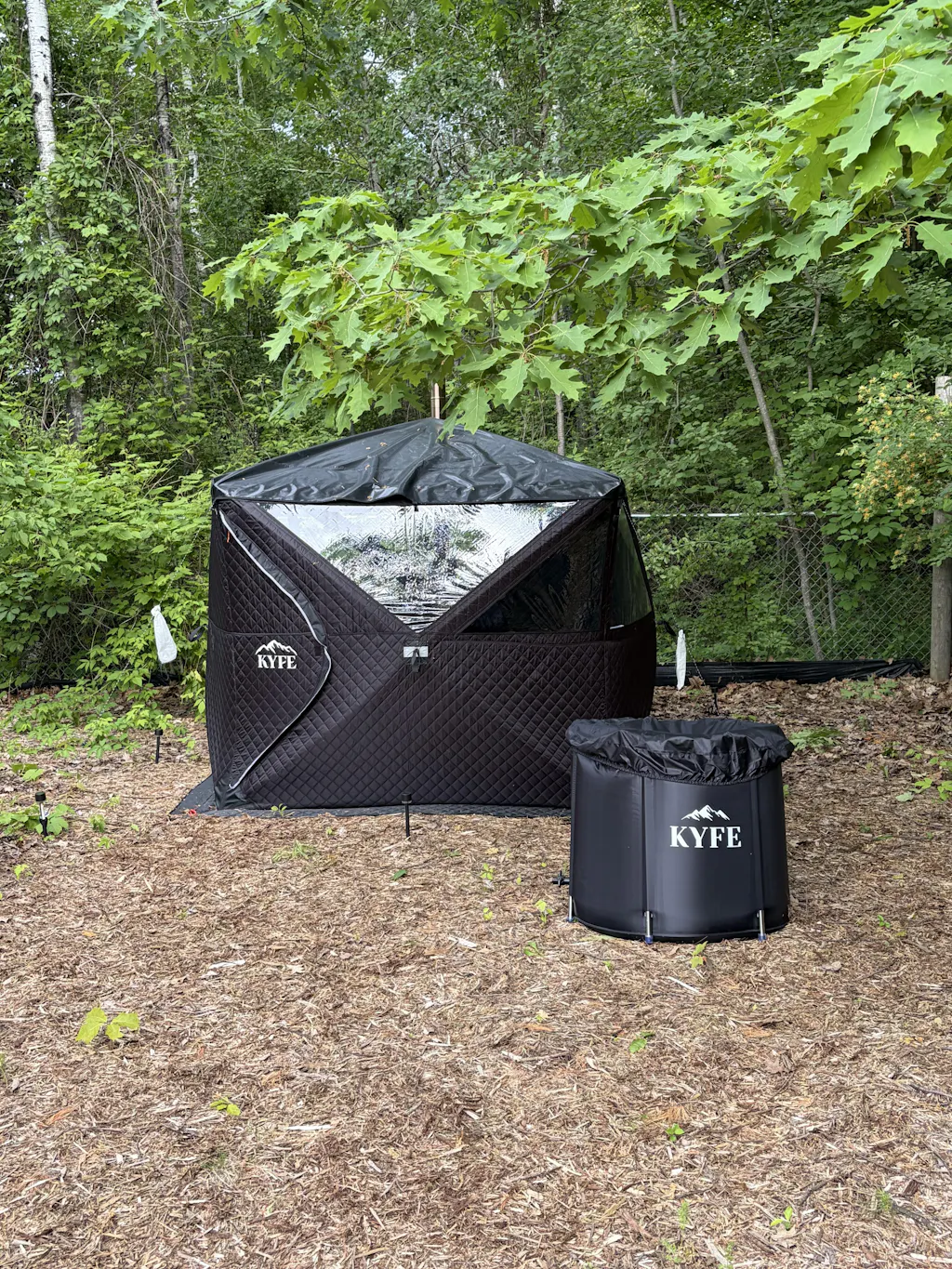
$1,499. Complete. Stove, rocks, gloves, thermometer, travel bag, and a free cold plunge included. No electrician. No pad. No permit for a portable structure in most jurisdictions. No delivery fee beyond standard shipping. Operational the same day it arrives.
Total all-in cost before first session: $1,499.
The cost gap between these two products is not $1,000–$2,000. When all-in costs are included, the gap is $2,500–$10,500. For buyers evaluating these options seriously, that number is not trivial — it is the dominant variable in the decision.
The Cost Per Session Argument — And Why It Favors Kyfe
One argument made in favor of barrel saunas is cost per session over time. The reasoning: a $5,000 barrel sauna used 3 times per week for 10 years works out to approximately $3.20 per session. A $1,499 Kyfe used at the same frequency over the same period works out to approximately $0.96 per session. The Kyfe wins that argument too.
But there's a more important variable in the cost per session calculation: actual use frequency.
The Finnish longitudinal research that documents the strongest sauna health outcomes — cardiovascular benefit, longevity associations, stress reduction — is based on four or more sessions per week. The research doesn't just show that sauna is beneficial. It shows that frequency is the key variable. Users who sauna four-plus times per week show dramatically better outcomes than once-a-week users.
A barrel sauna installed in your backyard should theoretically support high frequency — it's always there. In practice, the friction of outdoor sessions in bad weather, the limited placement options of a fixed structure, and the inaccessibility when you're away from home all reduce actual use frequency below what's theoretically possible.
The Kyfe removes every friction point. It sets up anywhere — in your backyard today, at your cabin this weekend, at a campsite next month. It works when your electricity is out. It's available when you're hosting friends. It goes to the lake house. The portability doesn't just mean convenience — it means higher actual use frequency. And higher actual use frequency is the variable that determines health outcomes.
For the buyer who uses their Kyfe five times per week and their barrel sauna three times per week, the Kyfe is delivering more health value per dollar — not less. Read more about why frequency matters so much in our post on how often you should use a sauna.
Portability: More Than a Convenience Feature
Portability gets treated as a secondary consideration in most comparison articles — a nice-to-have for buyers who travel, less relevant for homeowners with a permanent backyard setup.
That framing underestimates what portability actually means for a product you use four times a week for years.
Life changes. People move. Rental properties can't accommodate permanent structures. HOA rules restrict outdoor installations. A partner who wasn't sold on the sauna idea becomes more interested when the option is a portable tent rather than a permanent structure. A basement renovation needs the backyard temporarily. A summer cabin becomes the primary sauna location for three months.
Every one of these scenarios — which most buyers will encounter over a decade of sauna ownership — is a non-issue with the Kyfe and a significant complication with a barrel sauna. The barrel sauna is where it is. The Kyfe is where you need it.
The portability also opens experiences that a barrel sauna can't offer at all. Kyfe owners regularly describe their most memorable sessions as riverside setups with the 360° panoramic view and steam visible against cold morning air — not their backyard. A barrel sauna, however beautiful, never leaves the property it was installed on.
Installation Timeline: Months vs. Same Day
This variable is more significant than most buyers realize until they're in the middle of it.
A barrel sauna purchase typically takes 4–12 weeks from order to first session. Site preparation takes time. Delivery requires scheduling. If electrical work is involved, electrician availability adds weeks. If permits are required, approval timelines vary by municipality and can stretch to 4–8 weeks in some jurisdictions. A buyer who orders a barrel sauna in March may not have their first session until June.
The Kyfe ships in 1–2 business days. It arrives operational. The first session happens the same day or the day after delivery. For the buyer who has decided they want a sauna in their life, that timeline difference is meaningful.
Durability and Longevity
This is the category where barrel saunas have the most legitimate advantage — and it deserves an honest treatment.
A quality cedar barrel sauna, properly maintained, lasts 15–25 years. Cedar is naturally rot-resistant, handles temperature cycling well, and ages gracefully. The stove, if properly maintained, has a similarly long lifespan. For buyers who want to install something once and use it for decades, the barrel format has genuine longevity advantages.
The Kyfe is built for serious, daily use — the triple-layer shell and stainless steel stove are designed to handle regular outdoor conditions, and the product is backed by a 60-day return window that reflects confidence in the build quality. But a fabric and pole tent structure, however well-built, has a different durability profile than solid cedar construction. Over very long time horizons — 15+ years of heavy use — a quality barrel sauna will likely outlast a portable tent.
For buyers who are certain about their permanent backyard setup and want a 20-year installation, that longevity argument has weight. For the majority of buyers who want excellent sauna performance, value, and flexibility — and who aren't certain their backyard layout, living situation, or preferences will be identical in 2040 — the barrel's longevity advantage doesn't change the fundamental calculus.
Aesthetics and Property Value
Barrel saunas are genuinely beautiful. A quality cedar barrel in a well-designed backyard is an attractive permanent feature — and a meaningful addition to the character of a property. Some buyers report it as a selling point when listing their home.
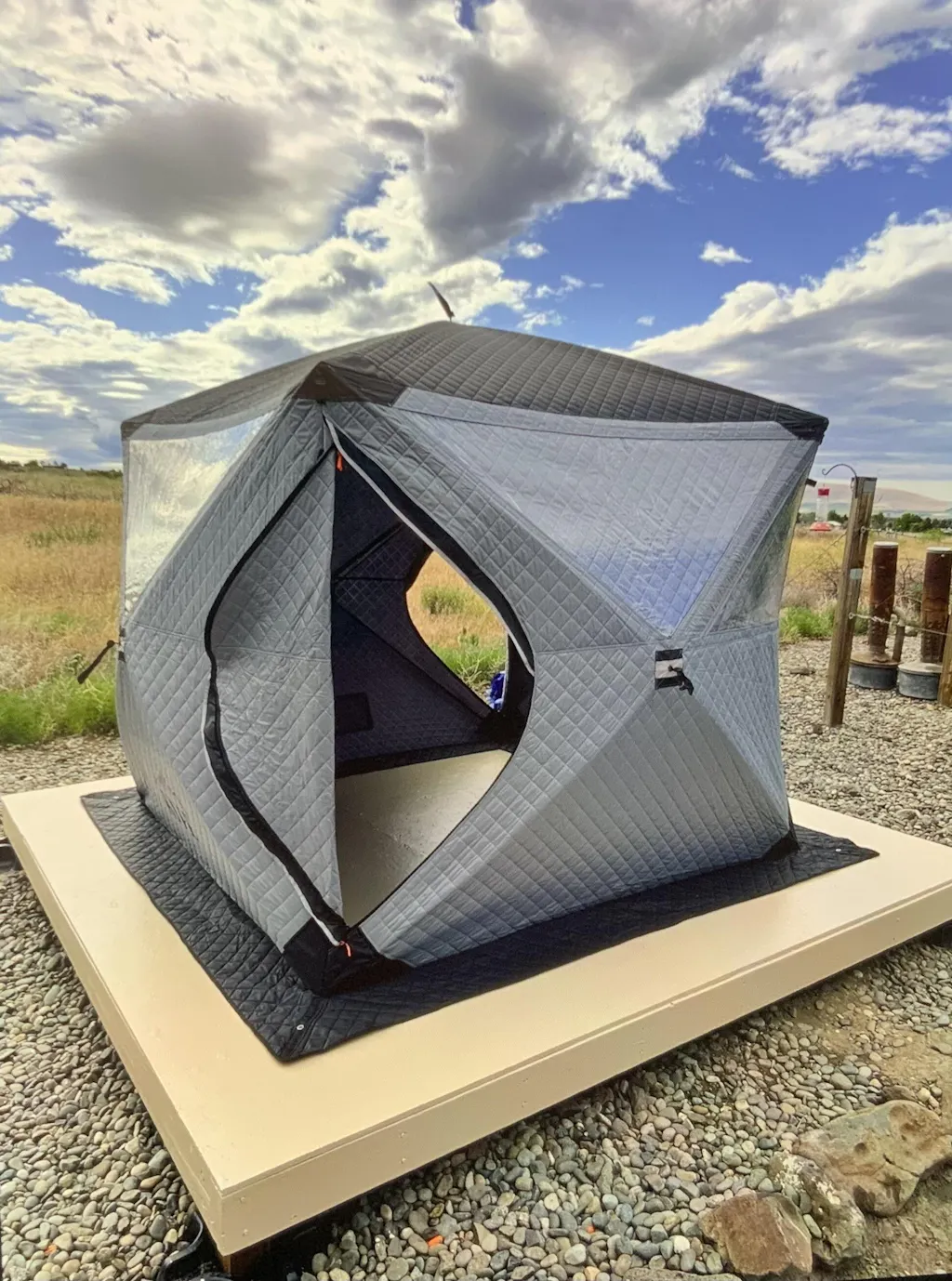
The Kyfe is designed to look intentional — not like camping gear. It comes in Forest Green, Arctic Gray, and Black (Limited Edition) and is built to look at home in a serious outdoor wellness setup. But it is a tent. It doesn't add to your property's permanent aesthetic in the way a barrel sauna does.
If aesthetics and property character are significant factors in your decision — and for some buyers they are — the barrel sauna has a real advantage here. This is worth acknowledging.
Maintenance: What Each Format Requires
Barrel sauna maintenance is ongoing and moderately demanding. Cedar exterior requires re-staining or sealing every 2–3 years to prevent weathering and cracking. Interior wood should be cleaned regularly to prevent mold and odor. Rocks need inspection and replacement over time. The stove requires ash removal and periodic inspection. Total annual maintenance time: several hours, plus $100–$300 in materials every 2–3 years.
Kyfe maintenance is simpler. The stainless steel stove requires ash removal after sessions. Rocks need inspection for cracking and occasional replacement. The tent exterior should be dried before storage to prevent mildew. Our complete guide to keeping your Kyfe in perfect condition is in our post on how to clean a portable sauna.
For buyers who want minimal maintenance overhead, the Kyfe has a clear advantage. For buyers who don't mind the maintenance of a permanent outdoor structure, the barrel sauna's requirements are manageable.
Where Barrel Sauna Has a Genuine Advantage
A complete comparison acknowledges where the other option wins.
Long-term durability. A quality cedar barrel built to code lasts 15–25 years with proper maintenance. For buyers making a permanent multi-decade installation, the barrel's structural longevity is real.
Aesthetics and property value. A well-built barrel sauna is a beautiful outdoor structure that adds visual character and potentially market value to a property in ways a portable tent does not.
Fixed social space. A barrel sauna installed in a defined location creates a permanent gathering space with built-in seating, defined capacity, and a settled character. Some buyers prefer having a dedicated sauna space rather than a setup-and-pack-down routine.
Indoor-adjacent installation. Some barrel saunas can be installed closer to a home or on a covered deck in ways that make year-round outdoor use more convenient in severe climates. The Kyfe requires outdoor placement with appropriate stove clearances.
If any of those factors are primary in your decision, the barrel sauna deserves serious consideration.
The Honest Scorecard
| Category | Kyfe Portable Tent | Barrel Sauna |
|---|---|---|
| Max temperature | 200°F | 160–190°F |
| Heat quality (wood-fired) | Excellent — 35lb volcanic rocks | Excellent — equivalent |
| Authentic löyly | Yes — real rocks and flash steam | Yes |
| All-in cost before first session | $1,499 | $4,000–$12,000+ |
| Running cost | Near zero (wood fuel) | $300–$600+/yr (electric) or wood |
| Installation timeline | Same day | 4–12 weeks |
| Portability | Complete — goes anywhere | None |
| Permit required | Usually not | Often yes |
| Durability | Daily-use construction | 15–25 years (cedar) |
| Aesthetics / property value | Functional, intentional | Premium permanent feature |
| EMF exposure | Zero | Zero (wood-fired) |
| Storage when not in use | Travel bag | Permanent footprint |
| Total 5-year cost | ~$1,499 + wood | $5,000–$14,000+ all-in |
FAQs
Does a portable sauna tent get as hot as a barrel sauna? Yes — and in the case of the Kyfe, hotter. The Kyfe reaches 200°F in under 30 minutes. Most quality wood-fired barrel saunas reach 170–190°F. The triple-layer insulated shell retains heat efficiently enough to maintain operating temperature through cold winter sessions. On heat performance, the portable tent is not a compromise relative to the barrel.
How long does the Kyfe last with regular use? The Kyfe is built for daily use with a stainless steel stove, high-grade insulated shell, and volcanic rock construction. The 60-day return window reflects confidence in the product. For buyers committed to daily use over many years, the barrel sauna's cedar construction has a longer theoretical lifespan — but for most buyers' actual use horizons, the Kyfe's durability is more than sufficient.
Can a barrel sauna be moved if I relocate? Barrel saunas can technically be disassembled and relocated, but it requires significant effort, professional help, and often results in damage to the structure. In practice, most barrel saunas stay where they're installed. The Kyfe packs into a travel bag in 15 minutes and moves anywhere.
Do I need a permit for the Kyfe? In most jurisdictions, portable structures not permanently affixed to the ground do not require building permits. The Kyfe is not a permanent structure. Barrel saunas typically require permits as permanent outdoor structures. Our full guide on portable sauna permits covers the specifics.
Which is better for resale value? A well-installed barrel sauna in good condition can add to a property's appeal. The Kyfe moves with you — it's an asset you take to your next home rather than one that stays with your current property. For buyers who move frequently or aren't certain about their long-term living situation, the Kyfe's portability is a financial advantage, not a disadvantage.
What's included with the Kyfe? Everything needed for your first session: insulated sauna tent, stainless steel wood-burning stove, 35 pounds of volcanic sauna rocks and rock cage, tent travel bag, fire poker, heat-resistant gloves, thermometer, and instruction manual. A free cold plunge is included with every order. Nothing is sold separately. Learn more at kyfe.com/products/kyfe-portable-sauna-tent.
The Bottom Line
Barrel saunas are premium outdoor structures with genuine aesthetic appeal, long-term durability, and a permanent character that some buyers specifically want. For the buyer who has a permanent property, a defined outdoor space, and a budget for the full installation, the barrel format delivers a beautiful and lasting sauna.
But for the serious buyer who is running the actual numbers — all-in cost, installation timeline, running costs, frequency of use, and long-term flexibility — the Kyfe wins decisively. It reaches 200°F. It produces authentic löyly. It delivers the wood-fired sauna experience that the health research is based on. And it does it at a fraction of the all-in cost of a barrel installation, on a same-day timeline, with complete portability that makes daily use a realistic habit rather than a fixed-location commitment.
The buyer who chooses a barrel sauna is buying an outdoor feature. The buyer who chooses the Kyfe is buying a sauna practice.
Shop the Kyfe Portable Sauna Tent — $1,499 complete, free cold plunge included, ships in 1–2 days.
How to Get the Perfect Löyly: A Beginner's Guide to Sauna Steam
Sauna Routine for Beginners: How to Start Safely and Get the Most Out of Every Session