

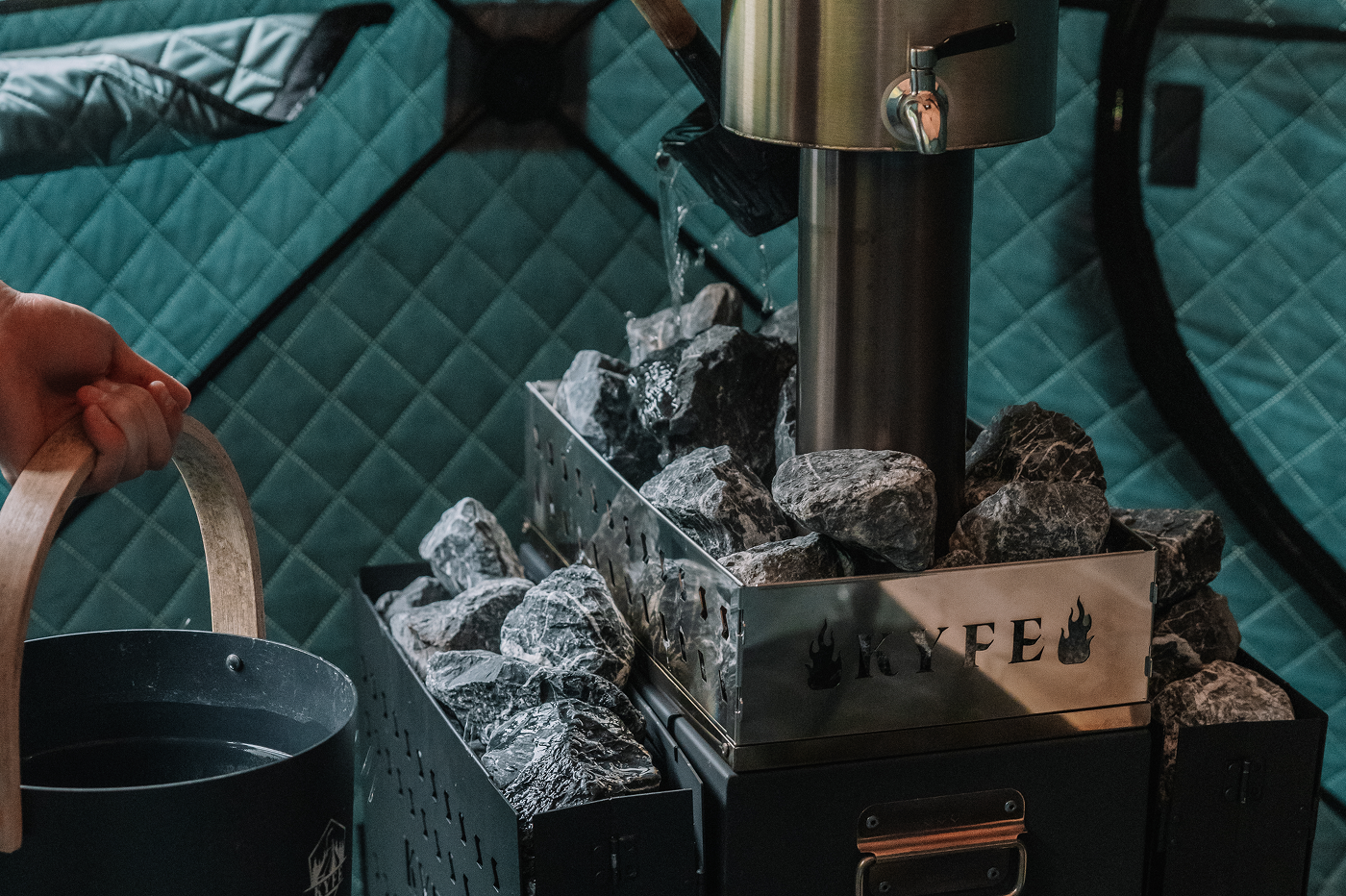
If you've ever stepped into a traditional Finnish sauna and felt that sudden, enveloping wave of heat the moment water hit the rocks — that was löyly. If you've ever had a sauna session that felt flat, thin, or somehow disappointing despite the temperature being right — the löyly was probably wrong.
Most beginners focus on the heat. The experienced sauna user knows that heat is the backdrop. Löyly is the experience.
This guide covers everything a first-time or early-stage sauna owner needs to know about löyly — what it is, why it matters, how to create it correctly, how to ruin it, and how to master it over time. If you own a Kyfe, you already have everything you need to produce excellent löyly from your very first session. Here's how to use it.
What Löyly Actually Means
Löyly (pronounced roughly "LOY-loo") is the Finnish word for the steam produced when water is poured over hot sauna rocks. The literal translation is closest to "steam" or "vapor" — but Finnish sauna culture treats it as something far more significant than the English word suggests.
In traditional Finnish sauna philosophy, löyly is the soul of the sauna. Without it, you're sitting in a hot room. With it, you're having a sauna. The distinction isn't poetic exaggeration — it reflects a genuine physiological difference in the experience. Dry heat and heat with löyly produce different sensations, different sweat responses, and different physiological outcomes. The humidity from löyly allows heat to penetrate the skin more effectively, produces a more intense sweat response, and creates the full-body enveloping warmth that sauna culture has celebrated for thousands of years.
The word also carries spiritual weight in Finnish tradition. Historically, löyly was associated with the spirit of the sauna — an invisible presence that the steam released. The sauna was considered sacred space, and the act of creating löyly was treated with corresponding respect. That cultural depth is part of why so many people who experience authentic löyly for the first time describe it as qualitatively different from anything they expected.
You can read more about the history and cultural significance of sauna in our post on what saunas are actually used for.
The Difference Between Good Löyly and Bad Löyly
Finnish sauna culture has developed precise vocabulary for describing löyly quality — because not all löyly is equal. Understanding the difference between good and bad löyly is the first step to consistently producing the former.
Soft löyly (pehmeä löyly) is the gold standard. It feels moist, heavy, and enveloping. It spreads through the sauna like a warm blanket — you feel it descend from the ceiling and settle around your entire body. Breathing remains easy and pleasant. Your skin heats deeply without stinging. It encourages a thorough, cleansing sweat and a profound sense of relaxation. This is what most Finns would describe as ideal löyly and what you should be aiming for from every session.
Hard löyly (kova löyly) is the opposite. It feels thin, sharp, and aggressive. It stings the skin, makes breathing uncomfortable, and can drive you out of the sauna faster than you intended. This typically happens when the rocks aren't hot enough, the water is too cold, or too much water is poured at once. Hard löyly is a sign that something in the setup is off — the rocks, the temperature, the technique, or the timing.
The goal of every technique described in this guide is consistently producing soft löyly — the kind that makes people understand immediately why the Finnish sauna tradition has survived for thousands of years.
Why Wood-Fired Saunas Produce the Best Löyly
Not all heat sources produce löyly equally. This is one of the most important practical distinctions for anyone choosing a sauna.
Wood-fired saunas — like the Kyfe — heat sauna rocks using direct flame. The fire heats a large mass of volcanic rock through direct combustion, pushing rock surface temperatures to 600°F and above. When water hits rock at that temperature, flash evaporation occurs almost instantaneously — the water converts to steam so fast that a fine, soft vapor is released rather than the wet, heavy steam produced when rocks are merely warm.
The result is löyly that is lighter, softer, and more enveloping than what most electric heaters produce. Electric elements heat rocks more slowly and to lower temperatures, which produces a heavier, wetter steam that many experienced sauna users describe as harsh by comparison. Traditionalists consistently assert — and most experienced users agree — that wood-fired löyly has a quality that electric simply doesn't replicate.
The Kyfe's stove and 35 pounds of volcanic sauna rocks are specifically designed to produce this quality of steam. Given enough preheating time — typically 25–35 minutes from a cold start — the rocks reach the temperature needed for genuinely exceptional löyly. Read more about the rocks themselves and why stone selection matters in our post on sauna rocks and the ultimate sauna experience.
The Equipment You Need
Good löyly starts with the right equipment. The mechanics are simple but the details matter.
The stove and rocks. The Kyfe comes with a stainless steel wood-burning stove and volcanic sauna rocks included. These are designed specifically for löyly production — the rocks are dense, heat-retentive, and sized correctly for the Kyfe's stove configuration. Do not substitute random stones — sauna rocks are specifically selected for thermal properties and crack resistance. Standard river stones or garden stones can crack or explode when heated to sauna temperatures.
The bucket and ladle. You need a proper sauna bucket (traditionally called kiulu in Finnish) and a long-handled ladle (kauha). The Kyfe Bucket and Ladle set is made from metal with pinewood handles and is designed specifically for sauna use. The long handle is not decorative — it keeps your hand away from the steam burst when you pour. You can find it at kyfe.com/products/kyfe-bucket-and-ladle.
The water. Fresh, clean water is the standard. Some experienced sauna bathers use warm water rather than cold, believing it produces a gentler steam. In practice, water temperature has a smaller effect on löyly quality than rock temperature and pouring technique — but warm water is a reasonable preference as you develop your practice. If you want to add aromatherapy, add a few drops of essential oil to the water in the bucket before pouring — never directly onto the rocks. The Kyfe Essential Oils Set of 3 is specifically selected for sauna use and takes the guesswork out of which oils work best at high heat. Read our full guide on the benefits of eucalyptus oil in a sauna tent for technique and benefit breakdowns.
How to Preheat the Rocks Correctly
This is the step most beginners skip or rush — and it is the single most important factor in löyly quality.
Rock temperature determines steam quality. Cold or insufficiently heated rocks produce heavy, wet steam that falls quickly and feels harsh. Rocks at full temperature produce fine, light steam that rises and fills the entire sauna with soft warmth.
The Kyfe stove and rocks need a minimum of 25–30 minutes of burning time from a cold start before you attempt löyly. Aim for 30–35 minutes for best results. The thermometer included with your Kyfe measures air temperature — the rocks will be significantly hotter than the ambient air reading. When the air temperature reaches 170°F and has been stable for 10 minutes, your rocks are ready.
Use dry, dense hardwood — oak, hickory, birch, or maple. Softwoods like pine burn fast, produce excess smoke, and don't generate the sustained heat needed for optimal rock temperature. A well-maintained fire with quality hardwood is the foundation of everything that follows.
How to Read Your Rocks
This is the section most sauna guides skip — and the one that separates users who consistently produce excellent löyly from those who get inconsistent results.
Sauna rocks change over time, and learning to read them is part of developing an authentic sauna practice.
Color tells you temperature. Rocks that have been properly heated take on a dark, almost glowing appearance. If your rocks look pale or grey after 30 minutes of burning, the fire isn't hot enough or the wood is too wet. Properly heated volcanic rock should look almost black and radiate visible heat when you hold your hand near the pile.
Sound tells you readiness. A properly heated rock pile makes almost no sound at rest. If you hear crackling or pinging from the rocks during the heating phase, that's fine — it's thermal expansion. If you hear those sounds during a pour, it typically means the rocks are cycling too quickly between heat and cold, which can indicate the pour is too large or the rocks are slightly under temperature.
Cracking means replacement time. Rocks develop hairline cracks over time — this is normal. But when cracks become visible splits or when rock edges begin to crumble, those rocks need replacing. Using structurally compromised rocks risks fracturing mid-session, which is dangerous. Inspect your rocks every 15–20 sessions and replace any that show significant cracking. Replacement rocks are available at kyfe.com/collections/accessories.
Color changes after many sessions. Over time, sauna rocks develop a whitish mineral deposit on their surface from repeated water contact. This is normal and doesn't affect performance. Some users rinse their rocks occasionally with clean water between sessions to slow this buildup. Rocks that have turned chalky white throughout rather than just surface deposits have likely absorbed too much mineral content and should be replaced.
Developing the habit of checking your rocks before each session takes 30 seconds and prevents the two most common löyly failures — under-temperature rocks and structurally compromised stones that affect steam quality.
The Pouring Technique: Step by Step
This is where the art begins. Technique matters here more than most beginners expect.
Step 1: Start small. For your first pour of the session, use a small amount of water — roughly a third of a ladle. Do not pour a full ladle onto cold or insufficiently heated rocks. The first pour tells you where the rocks are. A sharp hiss and immediate steam rise tells you the rocks are ready. A sluggish response with heavy, falling steam tells you to wait longer.
Step 2: Aim for the center and top. The hottest part of the rock pile is the upper center. This is where direct heat from the stove is concentrated. Aim your pour there. A gentle, controlled motion is better than a hard splash — you want the water to flow onto the rocks evenly, not blast them.
Step 3: Listen. The sound of a good löyly is a sharp, sustained hiss — almost musical. A dull thud or a splashing sound means the water hit the metal stove rather than the rocks, or the rocks aren't hot enough. Adjust your aim and try again on the next round.
Step 4: Feel it rise. Good löyly rises to the ceiling of the sauna and then descends slowly as a wave of enveloping warmth. You should feel it settle over your entire body within 10–15 seconds of pouring. If it doesn't reach you or dissipates quickly, the rocks are slightly under temperature or the pour was too small.
Step 5: Wait before pouring again. This is the most common beginner mistake — pouring again immediately. Let the löyly wave wash over you completely before considering another pour. The sauna will tell you when it's ready. The heat will begin to feel slightly less intense as the steam disperses. That's your cue for the next pour. A rhythm of pour, feel, wait, pour is the foundation of the sauna ritual.
Water Additives Beyond Essential Oils
Most sauna guides cover eucalyptus and stop there. The range of water additives used across sauna cultures is broader — and each produces a distinct löyly experience worth knowing about.
Birch water or birch extract. The most traditional Finnish and Russian additive after plain water. Birch produces a delicate, woody sweetness that many experienced sauna bathers describe as the most authentically "Finnish" scent available. In Russian banya culture, fresh birch branches soaked in hot water (the venik) are used both for the water and as a body treatment. A few drops of birch extract in your water bucket produces a similar effect without the full banya ritual.
Beer. Traditional in Finnish sauna culture and several other Nordic traditions. A small amount of dark beer added to the water bucket produces a rich, malty steam that softens the skin and creates a uniquely warm, complex löyly experience. Use a beer you'd actually drink — quality matters. Light lagers produce a thin result. Dark ales and stouts produce a full, round steam. Don't overdo it — a quarter cup per bucket is plenty.
Honey water. A small amount of raw honey dissolved in warm water and added to the bucket produces a gently sweet steam that softens the skin and creates a mild, luxurious experience. Common in wellness spa saunas. Best used toward the end of a session when the heat is slightly lower — high temperatures can caramelize honey and produce a sticky residue on the rocks over time.
Salt water. A small amount of coarse sea salt dissolved in the bucket produces a minerally, ocean-like steam. Traditional in coastal sauna cultures. Produces a slightly softer feeling on skin during and after the session. Note that regular salt use can accelerate rock surface mineral buildup over time.
Whatever additive you use, always dilute in the water bucket before pouring. Nothing goes directly onto the rocks. And as with essential oils — start with less than you think you need. Aromatic steam is more intense than it appears before the pour.
Common Löyly Mistakes and How to Fix Them
Pouring too much water at once. The single most common mistake. A massive pour doesn't produce better löyly — it produces an overwhelming steam burst that is harsh and uncomfortable, followed by a sauna that feels wet and heavy. Multiple small pours produce consistently better löyly than one large pour. Less is genuinely more here.
Pouring too early. If the rocks aren't at temperature, the löyly will be heavy and disappointing. Wait the full 30 minutes. It's worth it.
Pouring cold water from the wrong angle. Cold water poured from too far away or at the wrong angle hits the stove body rather than the rocks, producing a metallic clang and no useful steam. Get close enough that you can aim accurately, and use the ladle handle to control direction.
Using wet or soft wood. Green or wet wood burns slowly, produces excess smoke, and doesn't generate the heat needed for proper rock temperature. Dry, seasoned hardwood is non-negotiable for quality löyly.
Over-pouring after adding essential oils. If you've added eucalyptus or other essential oils to your water, the aromatic steam is more intense than plain water steam. Start with an even smaller pour than usual when using essential oils, and build from there.
Building Your Löyly Ritual: A Complete Session Structure
The mechanical technique is learnable in a few sessions. The ritual that forms around it takes longer to develop — and is ultimately what makes a sauna practice feel non-negotiable.
Here is a complete session structure that experienced Kyfe users have found produces consistently excellent results:
The first round — opening löyly. Enter when the Kyfe reaches 160–170°F. Use plain water for the first round. Pour a small, conservative amount — enough to raise the temperature a few degrees and confirm the rocks are ready. This round is about opening up, not intensity. Two or three small pours over 12–15 minutes. Exit and cool briefly.
The second round — the main event. Re-enter at full heat — 180–200°F. This is where the session's primary löyly experience happens. Use your preferred water additive — essential oils, birch extract, or plain water. Pours can be slightly larger now that the rocks are fully up to temperature. This round produces the deepest sweating and the most intense steam experience. 12–15 minutes, ending when you feel the heat becoming genuinely demanding.
The third round — closing ritual. After cooling — ideally with your cold plunge — re-enter for a final shorter round. 8–10 minutes. Use gentle, minimal löyly or none at all. This round is meditative rather than intense. It closes the session and transitions your body toward the recovery state.
Post-session: rehydrate immediately with water and electrolytes. Sit quietly for 5–10 minutes before returning to normal activity. The physiological benefits of the session are most accessible in this transition window.
This three-round structure mirrors the traditional Finnish approach and is the format most directly aligned with the research on sauna health outcomes. Read more about building a complete sauna practice in our post on 10 high-impact things to do inside your sauna.
FAQs
How often should I pour water during a session? Every 3–5 minutes is a reasonable starting rhythm for most sessions. Listen to the sauna — when the intensity begins to drop and the air feels drier, pour again. There is no fixed rule. Develop the habit of feeling before pouring rather than pouring on a timer.
Can I use tap water for löyly? Yes. Clean tap water works perfectly. Filtered water is fine if you prefer it. Avoid hard water with high mineral content over time — mineral deposits can accumulate on the rocks and affect their performance. If you're in a hard water area, occasional rinses with filtered water help maintain rock quality.
What essential oils work best for löyly? Eucalyptus is the most popular and well-supported option — it opens airways and produces a cool, invigorating sensation. Birch is traditional in Finnish and Russian sauna culture and produces a soft, clean scent. Lavender is excellent for evening sessions focused on relaxation. The Kyfe Essential Oils Set of 3 includes three sauna-safe oils curated specifically for löyly use — the simplest way to start experimenting with aromatherapy without sourcing individual bottles. Always dilute in water before pouring — never apply directly to the rocks.
Why does my löyly feel harsh and uncomfortable? Almost always a rock temperature problem. The rocks need more preheating time. Give the stove another 10–15 minutes before trying again. Harsh löyly can also result from pouring too much water at once — try smaller, more controlled pours.
Do I need special sauna rocks or can I use any stones? You need proper sauna rocks. The Kyfe comes with volcanic sauna rocks specifically selected for heat retention and crack resistance. Do not substitute garden stones, river rocks, or decorative stones — they can crack or shatter at sauna temperatures, which is dangerous. Replacement rocks are available at kyfe.com/collections/accessories.
The Bottom Line
Löyly is not a feature. It is the experience. Every other portable sauna format — infrared blankets, steam tents, electric pods — either can't produce it or approximates it poorly. The Kyfe produces authentic löyly because it has what löyly requires: a wood-burning stove, real volcanic sauna rocks, and temperatures high enough for flash evaporation.
Learn the technique in this guide. Give your rocks the full preheating time. Start with small pours. Listen to the sauna. Within a few sessions, you'll develop the intuition that turns a good sauna into a ritual you protect.
Shop the Kyfe Portable Sauna Tent — everything included, ships in 1–2 days, free cold plunge with every order.
Sauna and Cold Plunge for Muscle Recovery: The Athlete's Protocol
Portable Sauna Tent vs Sauna Barrel: Which Is Worth Your Money?