

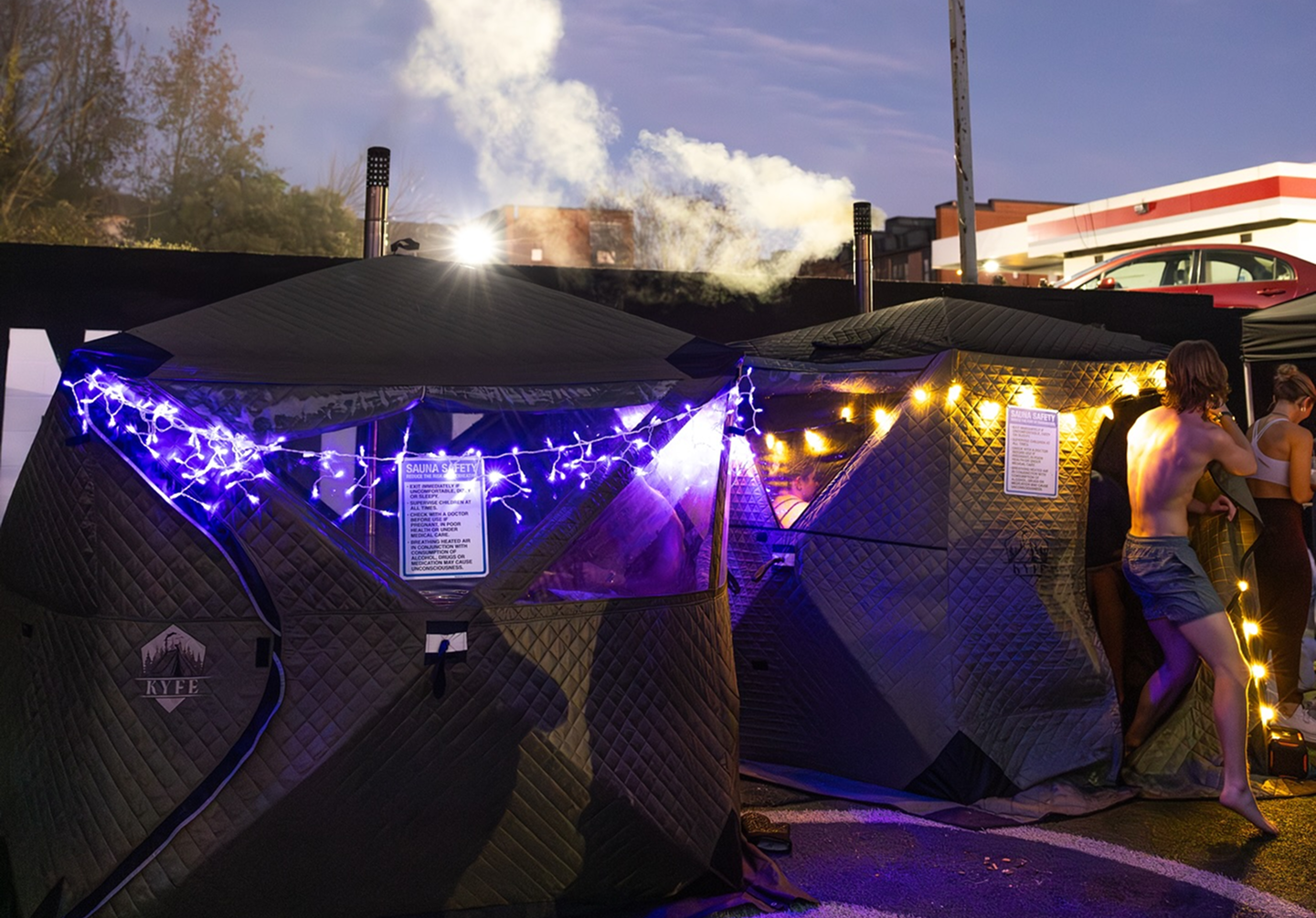
Three sauna formats. Three completely different heat sources, price points, installation requirements, and physiological experiences. Most comparison articles cover two of the three — usually infrared vs. traditional — and leave buyers without the full picture.
This is the complete comparison. All three formats, evaluated honestly, with real numbers and no neutral hedging. If you're making a serious decision about which sauna belongs in your life, this is the only guide you need.
How Each One Works
Before comparing outcomes, the mechanism behind each format matters. Three different heat sources produce three different experiences — and understanding that difference is what separates an informed buyer from one who ends up with the wrong product.
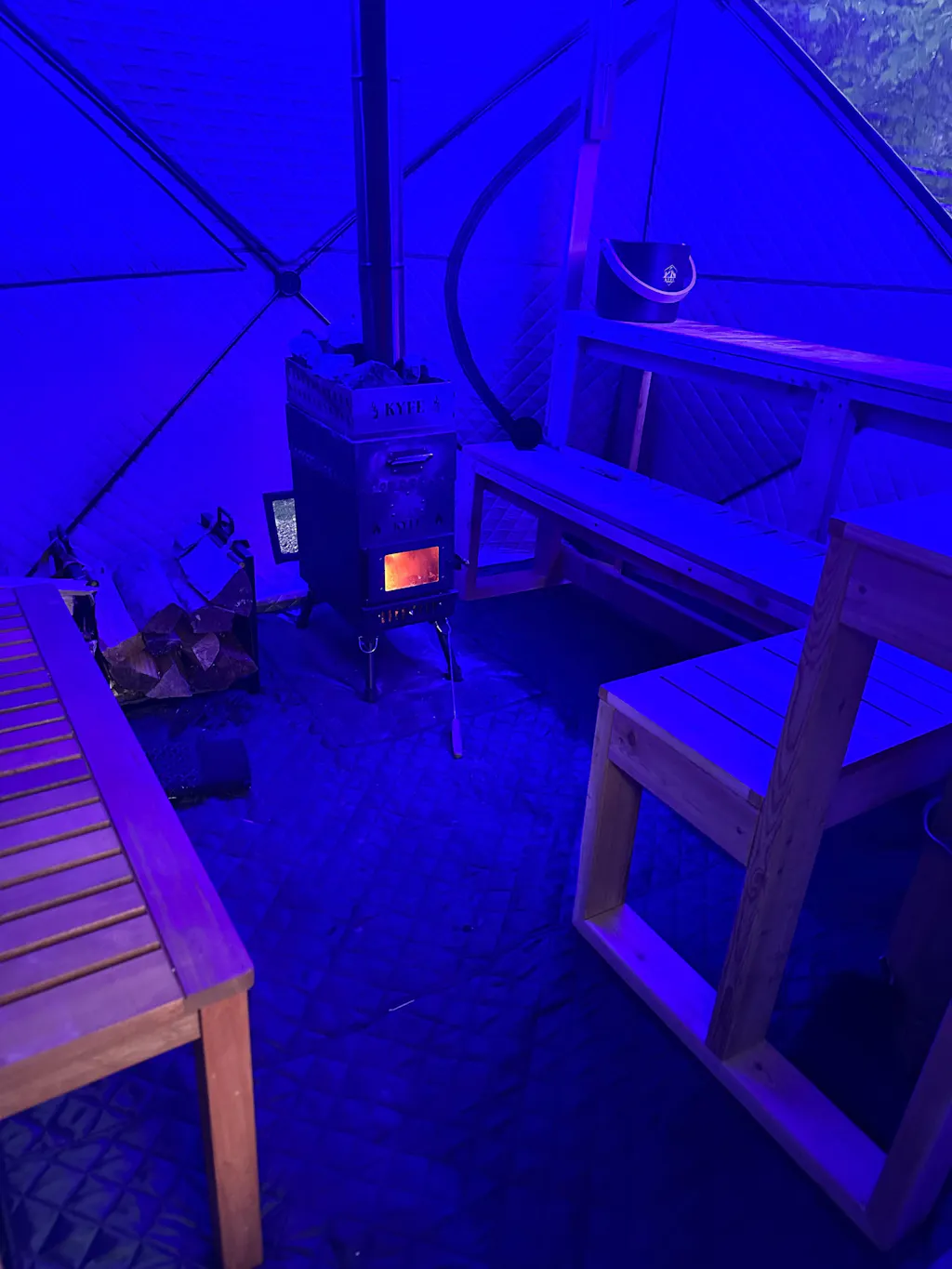
Wood-fired sauna uses a wood-burning stove to heat a large mass of sauna rocks — the Kyfe uses 35 pounds — which store and radiate deep, thermal heat throughout the session. The fire heats the air to 160–200°F. When water is poured over the hot rocks, it produces löyly — the burst of authentic Finnish steam that defines the traditional sauna experience. The heat source is wood. No electricity required.
Infrared sauna bypasses the air entirely. Infrared panels emit light waves that penetrate the skin directly, heating the body from the inside out at lower ambient temperatures — typically 120–150°F. The room itself stays relatively cool. You sweat because your body tissue is being heated at a cellular level, not because the air around you is hot. No fire, no steam, no rocks.
Electric sauna heats the air around you using resistance coils wired to a dedicated 240V circuit. It's the most common format in gyms, spas, and home installations. Stones are included and can produce steam when water is poured over them. Temperatures typically reach 150–194°F — the upper limit is set by UL code in the United States. Precise, controllable, and convenient.
Heat Quality: Where the Real Differences Live
Temperature is a number. Heat quality is the experience — and the two are not the same thing.
Wood-fired heat works through thermal mass. A large volume of dense rock stores energy and radiates it steadily, producing what experienced sauna users consistently describe as enveloping, alive heat. It ebbs and flows with the fire. The combination of convective heat from hot air and radiant heat from the rocks creates a full-body response that is more immersive than any other format at the same temperature reading. This is the heat the Finnish longevity research is based on — and the quality of that heat matters alongside the temperature number itself.
Electric heat is consistent and controllable but thinner by comparison. The resistance coils heat a smaller stone mass quickly and maintain a precise temperature. Users frequently describe the difference between wood-fired and electric as the gap between being wrapped in heat versus sitting in a hot room. Both are genuine sauna experiences. They are not identical experiences.
Infrared heat is categorically different from the other two. Because it heats the body directly rather than the air, the ambient environment is cool and dry. There is no enveloping heat, no convective warmth, no steam. It is a gentle, penetrating warmth that is effective for relaxation and mild recovery — but it is a different physiological stimulus than high-heat dry sauna, and it is not the format associated with the cardiovascular and longevity research most buyers are referencing when they make this investment.
For buyers who want to know which format delivers the experience that justifies the investment — wood-fired leads on heat quality, followed by electric, followed by infrared.
Temperature Performance
Temperature is the most frequently cited spec in sauna comparisons and the most frequently misunderstood.
Wood-fired: No regulatory ceiling. The Kyfe reaches 200°F in under 30 minutes and holds that temperature for the full session. The fire determines the ceiling — experienced users can push well beyond 200°F. No timer, no limiter, no restart.
Electric: Capped at approximately 194°F by UL code in the United States. Many standard units take 30–45 minutes to reach that ceiling, and session timers require a restart for extended use. Quality heaters maintain precise temperature within a narrow range throughout the session.
Infrared: Typically maxes out at 120–150°F. Some premium infrared units claim higher output, but the ambient air temperature in an infrared session is fundamentally lower than traditional heat by design. The body temperature rises, but the environmental temperature does not.
The research most commonly cited on sauna health outcomes — the Finnish longitudinal studies on cardiovascular health, heat shock protein activation, and longevity — is based on sessions consistently above 170°F. All three formats produce heat. Only two reliably reach the threshold where the research outcomes are most strongly associated. You can read more about what that temperature threshold actually does to the body in our post on how sauna affects metabolism.
Installation and Total Cost of Ownership
This is where the comparison becomes most consequential — and where most buyers get surprised after committing.
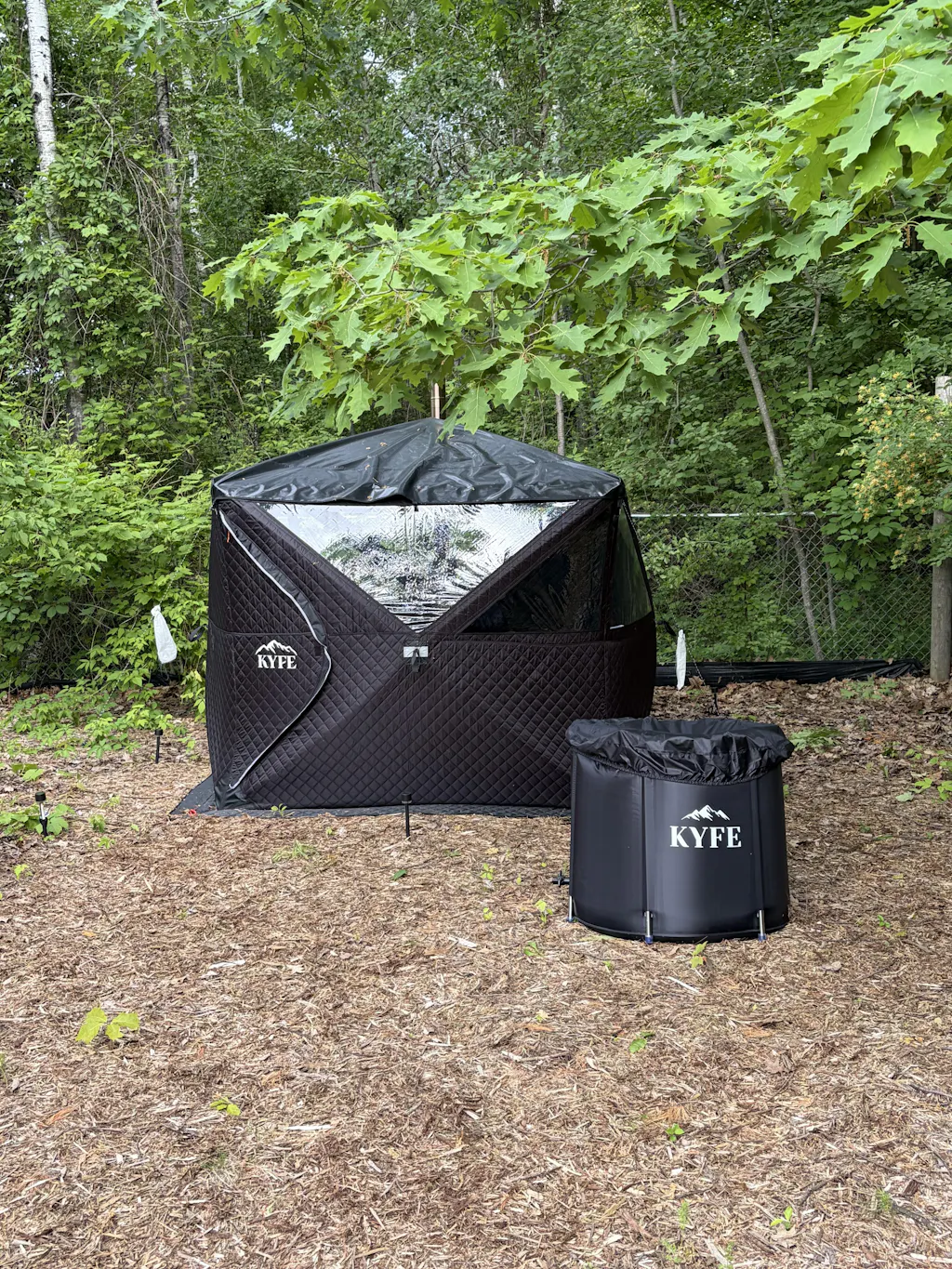
Wood-fired portable (Kyfe): $1,499 complete. Includes stove, rocks, gloves, thermometer, travel bag, and a free cold plunge. No electrician. No permit for a portable structure in most jurisdictions. No dedicated circuit. No installation timeline. Operational the same day it arrives.
Electric built-in: $3,000–$8,000 for the unit. Add a dedicated 240V circuit ($500–$1,200), panel upgrades in older homes ($1,500–$3,000), permits and inspections, and professional structural installation. Total before first session: $5,000–$15,000 depending on size and complexity.
Infrared cabin: $2,000–$6,000 for the unit. Requires a 120V or 240V outlet depending on the model. Installation is simpler than electric traditional, but quality models still need a dedicated circuit. Total all-in: $2,500–$7,000+.
Infrared blanket/tent: $200–$1,500. Lowest entry point. Plug into a standard outlet. No installation. Significant compromise on heat quality and experience.
For the buyer standing in their backyard pricing this out, the all-in cost comparison between a wood-fired portable and an electric built-in is the single most decisive number. The Kyfe delivers 200°F thermal mass heat for $1,499 all-in. An equivalent electric installation delivers similar heat at 5–10x the total cost before running expenses. That's not a budget comparison — it's the same core outcome at a fundamentally different investment level.
Running Costs Over Time
Wood-fired: Near zero. If you have access to firewood on your property, the session cost is zero. If purchasing seasoned hardwood, well under $5 per session. No electricity costs. No rate increases. No ongoing bills.
Electric: $1.50–$3.00 per session at average U.S. electricity rates for a 6–9 kW heater. Four sessions per week over five years runs $1,560–$3,120 in electricity alone — before rate increases.
Infrared: Lower electricity consumption than electric traditional — typically $0.20–$0.75 per session depending on the unit. More cost-efficient per session than electric, but still an ongoing cost that compounds over time.
Over a five-year period of consistent use, the running cost difference between wood-fired and electric is $1,500–$3,000. For buyers evaluating total cost of ownership rather than sticker price, that number is a real line item.
EMF Exposure
Wood-fired: Zero EMF. The heat source is wood and stone. Nothing to measure. No electromagnetic output of any kind.
Electric: EMF emissions from resistance heating elements. Quality manufacturers design for low EMF output. Ask for third-party testing data before purchasing — don't rely on brand claims. For daily users, cumulative exposure is a legitimate consideration.
Infrared: EMF is the most discussed concern with infrared sauna specifically, because the infrared panels are the heat source and they emit electromagnetic radiation by definition. Low-EMF certification is available on quality units and should be verified with independent testing data. For buyers planning daily use over years, this is worth scrutinizing carefully.
For buyers who use a sauna as a daily health practice and think carefully about what they're exposing their body to over time, wood-fired is the only format that completely eliminates EMF as a consideration.
Portability
Wood-fired (Kyfe): Complete portability. The entire kit packs into a travel bag. Sets up in 15 minutes on grass, concrete, a cabin deck, or a riverbank. Requires only wood. Customers use it in backyards, at campsites, on winter riverbanks, at lake houses, and at outdoor events.
Electric: Fixed or semi-fixed. Even "portable" electric options require a power source — they are portable only within range of a 240V outlet. Full cabin installations are permanent.
Infrared: Blankets and tents offer genuine portability — plug into a standard outlet anywhere power is available. Cabin infrared units are fixed installations.
The portability distinction matters for health outcomes, not just convenience. The research on sauna benefits consistently links frequency — four or more sessions per week — to the strongest outcomes. A format that removes every barrier to use is a format you use more often. The Kyfe's portability is a health advantage, not just a lifestyle feature. Read more about what frequency produces in our post on how often you should use a sauna.
The Authentic Experience
This matters to serious buyers more than comparison articles typically acknowledge.
Wood-fired sauna is the format sauna culture was built on. The ritual of building a fire, heating real rocks, pouring water to create löyly, and sitting in 180–200°F heat is the specific practice that Finnish sauna research documents. The sensory experience — crackling fire, wood smoke, steam rising from hot rocks — engages the parasympathetic nervous system in ways that a clinical infrared pod or a controlled electric room does not. Many regular sauna users describe the post-session state after wood-fired as qualitatively different from any other format. That's not nostalgia — it's the complete sensory and physiological engagement that comes from the real thing.
Infrared sessions are quiet, controlled, and clinical by comparison. Electric sessions are closer to traditional but lack the sensory dimension of a live fire. Neither is wrong — but for buyers investing in this for the long term, the experience that brings you back four times a week matters as much as the spec sheet.
You can read more about what authentic sauna practice means for your long-term health in our post on what saunas are actually used for.
Where Infrared and Electric Win
A complete comparison acknowledges where each format has a genuine advantage.
Infrared wins for:
- Indoor use with minimal installation — most units plug into a standard outlet
- Users who find high heat uncomfortable or have conditions limiting heat tolerance
- Lower entry cost for sauna blanket and tent formats
- Convenience — press a button, no preparation required
Electric wins for:
- Indoor permanent installation with precise temperature control
- Multi-person use in dedicated home sauna rooms
- Year-round indoor use in climates unsuitable for outdoor sessions
- Aesthetic integration into home design
Wood-fired wins for:
- Heat quality — deep, thermal mass heat that no other format matches
- Temperature ceiling — 200°F with no regulatory limiter
- Zero installation cost and zero running cost
- Complete portability — no power source required
- Zero EMF exposure
- The authentic sauna experience that sustains long-term use
If indoor use is a strict requirement, our full breakdown of indoor options is in our post on dry sauna vs infrared sauna.
The Complete Scorecard
| Category | Wood-Fired (Kyfe) | Electric Built-In | Infrared |
|---|---|---|---|
| Heat quality | Deep thermal mass | Consistent, thinner | Gentle, penetrating |
| Max temperature | 200°F+ (no limit) | ~194°F (UL capped) | 120–150°F |
| Research alignment | Direct — Finnish traditional | Moderate | Limited |
| Installation cost | Zero | $5,000–$15,000+ | $500–$3,000+ |
| Running cost | Near zero | $300–$600+/yr | $75–$300+/yr |
| EMF exposure | Zero | Low–moderate | Low–moderate |
| Portability | Complete | None | Partial (blankets/tents) |
| Indoor use | No — outdoor only | Yes | Yes |
| Authentic löyly | Yes — real rocks | Yes | No |
| Total 5-year cost | ~$1,499 + wood | $6,500–$18,000+ | $2,600–$8,500+ |
| Permit required | Usually not | Often yes | Usually not |
FAQs
Which sauna type has the strongest health research behind it?
The Finnish longitudinal studies most frequently cited on cardiovascular health, longevity, dementia reduction, and heat shock protein activation were conducted in traditional wood-fired saunas operating above 170°F. That research base is more extensive and longer-running than what exists for electric or infrared formats. For buyers making a health-focused investment, wood-fired has the deepest evidence alignment. Read more in our post on whether saunas help you live longer.
Is infrared sauna better for muscle recovery than traditional sauna?
Both deliver recovery benefits through different mechanisms. Infrared's deep tissue penetration at lower temperatures can be effective for joint and muscle relief. Wood-fired and electric sauna's higher temperatures trigger more significant heat shock protein production, which supports cellular repair and recovery. For serious athletic recovery, the higher temperature formats have a stronger physiological case. Our post on sauna for muscle recovery covers this in detail.
Can I use a wood-fired sauna in winter?
Yes — and many users consider winter the optimal season for wood-fired use. The Kyfe reaches 200°F regardless of outdoor temperature. The contrast between cold air and intense internal heat intensifies the experience and the post-session recovery response. Many customers report their most consistent use during winter months.
Which format is safest for daily use?
All three are safe for healthy adults with appropriate session lengths and hydration. Wood-fired sauna at high temperatures requires attention to hydration and session length — the intensity demands more respect than lower-temperature formats. For daily users specifically concerned about EMF accumulation over time, wood-fired eliminates that variable entirely.
Do I need a permit for the Kyfe?
In most jurisdictions, portable structures not permanently affixed to the ground do not require building permits. The Kyfe is not a permanent structure. Our detailed guide on portable sauna permits covers jurisdictional specifics.
The Bottom Line
Three formats. Three different relationships with heat, cost, installation, and experience.
Infrared delivers accessible, convenient heat therapy at lower temperatures and lower cost. For buyers with indoor-only requirements or a need for a gentle introduction to heat therapy, it has real value.
Electric delivers traditional high-heat performance in a permanent, precise installation. For buyers with dedicated indoor space and the budget for infrastructure, it's a premium option.
Wood-fired delivers the highest heat quality, the deepest research alignment, the most authentic experience, and the lowest total cost of ownership — with complete portability and zero EMF exposure.
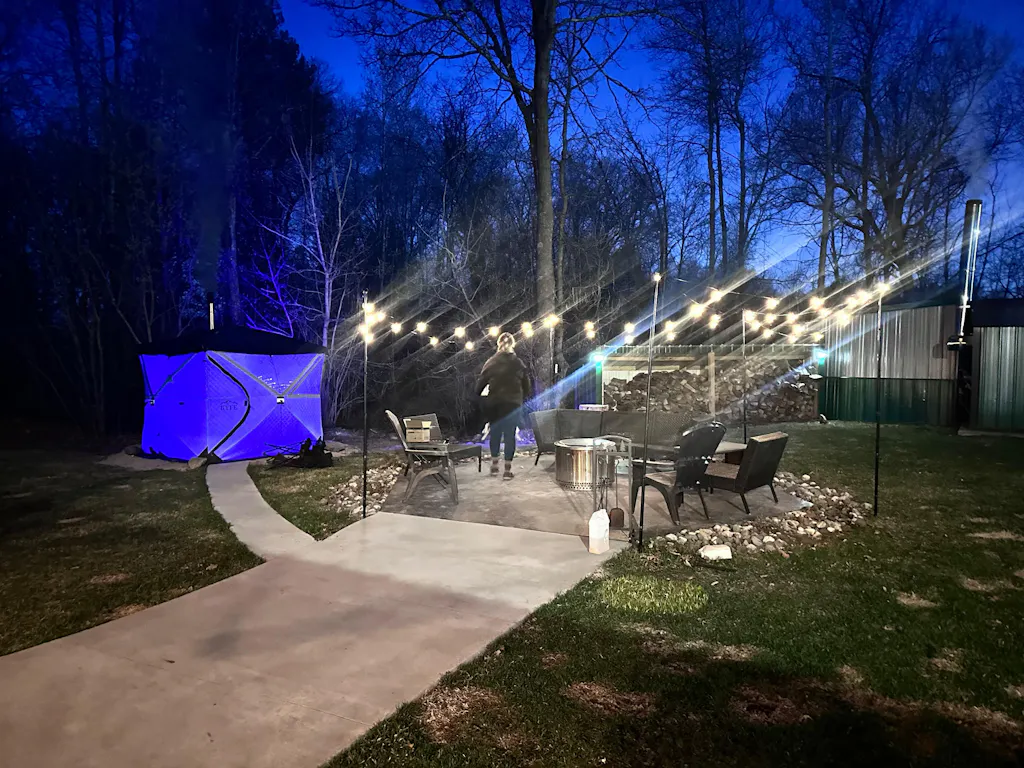
The Kyfe Portable Sauna Tent is $1,499 complete — stove, rocks, gloves, thermometer, travel bag, and a free cold plunge with every order. It reaches 200°F in under 30 minutes, sets up in 15 minutes, and goes anywhere you need it. No installation. No electrician. No electricity.
60-day returns. Ships in 1–2 days. Free shipping on orders $150+.
Questions? Call or text +1 (828) 782-8600.
Portable Sauna vs Traditional Sauna: Which Is Better for Home Use?
10 High-Impact Things to Do Inside Your Sauna